

Sedation Options for Kids Who Fear the Dentist: A Parent’s Guide
For many families, finding safe and gentle sedation dentistry for children with dental anxiety can be life-changing. Some children become nervous as soon as they hear the word “dentist.” Others may cry, refuse to sit in the chair, or panic when they see dental tools. When fear or anxiety prevents a child from receiving needed dental care, sedation dentistry can be a safe and helpful solution.
Sedation allows children to relax so they can receive dental treatment comfortably and without distress. This guide explains the different sedation options for kids who fear the dentist, how they work, and how parents can decide what is best for their child.
Why Some Children Fear the Dentist
Dental fear is common in children, especially those who have:
- Had a painful or frightening dental experience
- Strong gag reflexes
- Sensory sensitivities
- Difficulty sitting still
- Special needs such as autism, ADHD, or developmental delays
The dental office includes bright lights, loud sounds, unfamiliar smells, and people working very close to a child’s face. For many children, this feels overwhelming. When fear takes over, it becomes difficult or impossible for the dentist to provide safe and effective care.
Sedation dentistry is not about forcing a child to cooperate. It is about helping them feel calm, safe, and supported while treatment is completed.
What Is Sedation Dentistry for Children?
Sedation dentistry uses medication to help a child relax during dental treatment. Depending on the type used, a child may feel sleepy, calm, or lightly asleep while still being able to breathe on their own.
The goal of sedation is to:
- Reduce fear and anxiety
- Minimize discomfort
- Prevent movement during treatment
- Allow dental care to be completed safely
Sedation is carefully chosen based on the child’s age, health, anxiety level, and the type of dental procedure being done.
Types of Sedation Options for Children
There are several sedation options available for children. Each one is used for different levels of fear and different types of dental treatment.
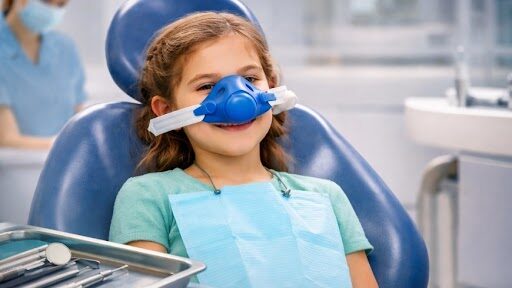
1. Nitrous Oxide (Laughing Gas)
Nitrous oxide is the mildest form of dental sedation. A child breathes it through a small mask placed over the nose.
What it does:
- Creates a calm, relaxed feeling
- Reduces anxiety
- Wears off quickly
Best for children who:
- Have mild to moderate dental anxiety
- Can follow simple instructions
- Need simple procedures like cleanings or small fillings
Children remain awake and responsive, but they feel more comfortable and less fearful.
2. Oral Sedation
Oral sedation involves giving a child medication by mouth before the dental visit. The medicine makes the child feel sleepy and relaxed.
What it does:
- Reduces anxiety
- Helps children tolerate dental treatment
- May cause partial or full sleep
Best for children who:
- Have moderate to high anxiety
- Have trouble sitting still
- Need more than one dental procedure
Children may not remember much about the visit afterward, which helps prevent future dental fear.
3. IV Sedation
IV sedation is given through a vein and is stronger than oral medication. A trained medical professional carefully monitors the child during the entire procedure.
What it does:
- Puts the child into a deep relaxed state
- Allows multiple procedures to be done at once
- Prevents awareness of the dental work
Best for children who:
- Have extreme dental fear
- Are non-verbal
- Have special healthcare needs
- Need extensive dental treatment
IV sedation is often used when other methods are not enough.
4. General Anesthesia
General anesthesia means the child is fully asleep during treatment. This is usually done in a hospital or surgical setting.
What it does:
- The child is completely unconscious
- No awareness of the procedure
- Allows complex dental work to be completed
Best for children who:
- Cannot tolerate any dental treatment while awake
- Have severe anxiety or special needs
- Need major dental work
This option is used when all other forms of sedation are not appropriate.
Why Sedation Can Be Life-Changing for Anxious Children
For children who fear the dentist, sedation can make the difference between ongoing dental problems and healthy teeth.
Sedation helps by:
- Preventing trauma
- Reducing fear for future visits
- Allowing all needed treatment to be done in one visit
- Protecting the child’s emotional well-being
Children who have calm, pain-free dental experiences are more likely to continue receiving regular dental care as they grow.
When Should Parents Consider Sedation?
Sedation may be recommended if a child:
- Cries or panics at dental visits
- Refuses to open their mouth
- Cannot sit still
- Has sensory sensitivities
- Needs multiple or complex procedures
- Has special healthcare needs
A dentist experienced in special needs care will help determine the best option.
How Parents Can Prepare Their Child
Even when sedation is used, preparation helps make the visit smoother.
Parents can:
- Talk calmly about the visit
- Avoid using scary words
- Explain that the dentist is there to help
- Follow all instructions about eating or drinking before sedation
The dental team will provide clear guidance before the appointment.
The Importance of Treating Dental Problems Early
When children avoid the dentist due to fear, small problems can become serious.
Untreated dental issues can lead to:
- Tooth pain
- Infections
- Difficulty eating
- Speech problems
- Emergency visits
Sedation allows these problems to be treated early, before they become more serious and more stressful.
Frequently Asked Questions
Is dental sedation safe for children?
Yes. When sedation is provided by trained dental professionals and the child is properly monitored, it is considered very safe. The child’s medical history, weight, and health conditions are reviewed before sedation is given.
Will my child be asleep during sedation dentistry?
It depends on the type of sedation. With nitrous oxide or oral sedation, children are relaxed and may feel sleepy but can still respond. With IV sedation or general anesthesia, the child may be in a deeper sleep and not aware of the procedure.
Is sedation only for children with special needs?
No. Sedation is commonly used for children who have dental anxiety, strong gag reflexes, past trauma, or difficulty sitting still – even if they do not have special needs.
Can my child feel pain during sedation?
Sedation significantly reduces discomfort and anxiety. Local anesthesia is also used to numb the mouth, so children should not feel pain during treatment.
How long does it take for sedation to wear off?
Nitrous oxide wears off within minutes. Oral and IV sedation can take several hours for full recovery. Parents are given after-care instructions and must supervise the child closely after the appointment.
How do I know if my child needs sedation?
If your child panics, cries, refuses treatment, or cannot sit still, sedation may be recommended. A dentist will evaluate your child’s anxiety level, medical history, and treatment needs before making a decision.
Dental fear should never stop a child from getting the care they need. Sedation dentistry offers safe, effective options that help children feel calm and protected while receiving treatment.
Whether a child needs mild relaxation or deeper sedation, the right approach can turn a frightening experience into a comfortable one. With the proper care and support, every child can have a healthy smile – without fear standing in the way.